
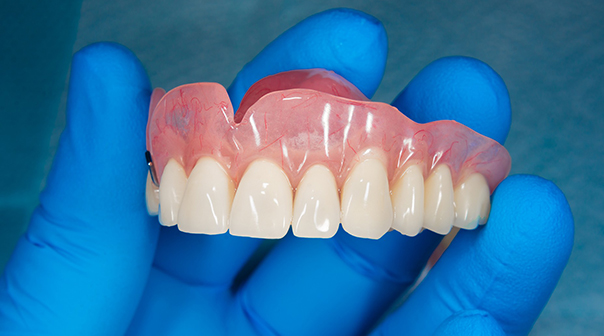
What are dentures?
Dentures are removable appliances designed to snugly fit over the gums, featuring lifelike artificial teeth supported by a base. They offer a budget-friendly solution for replacing missing teeth, whether it's a partial or full set in the upper or lower jaw. Unlike fixed alternatives such as bridges and implants, dentures can be effortlessly taken out for cleaning, promoting optimal oral hygiene. Additionally, they can be removed during sleep for added comfort.
Types of Dentures
Removable dentures come in two primary types: full and partial. Your optimal choice depends on the quantity and condition of your natural teeth. If you possess sturdy natural teeth, a partial denture could be the ideal fit. Conversely, if you're missing all upper or lower teeth or they require extraction, a complete denture might be the better solution.
Full Dentures
Complete dentures, also referred to as full dentures, offer a compelling option for replacing some or all of your teeth. It's essential to recognize that dental treatment is individualized, and complete dentures are tailored to meet the unique requirements of each patient.Conventional Full Denture
Following the extraction of all remaining teeth and adequate healing of the surrounding tissues, a personalized denture is crafted and inserted. Waiting for complete healing ensures precise and comfortable fitting of the denture.Immediate Denture
Patients have the option to receive immediate dentures immediately after tooth extraction, providing them with teeth without waiting for full healing. While this prevents them from experiencing a period of toothlessness, adjustments and realignment may be necessary as the tissues heal. In certain instances, transitioning to a conventional denture might be necessary to achieve the best comfort and fit.Overdenture
An overdenture is a complete denture enhanced for stability and support through special attachments. These attachments are affixed either to the remaining natural teeth or to specific dental implants.Implant-Supported Dentures
An implant-supported denture is a denture type that links to a predetermined number of implants strategically positioned in the upper or lower jaw. These implants act as small surgical posts, offering precise connection points for the denture and greatly enhancing stability and retention.Partial Dentures
Partial dentures offer an excellent solution for replacing missing teeth when some sturdy teeth are still present. These dentures utilize clasps or precision attachments on neighboring teeth to provide stability and retention within the gaps left by missing teeth. Removable partial dentures not only bridge the spaces but also restore the aesthetics and functionality of a complete smile, preventing natural teeth from shifting. The design and materials of partial dentures can be customized based on individual needs, with options including cast metal, flexible resins, and hybrid materials. At Lakeview Family Dentistry, we are committed to crafting dentures that not only enhance smiles but also offer comfort, durability, and lasting satisfaction for years to come.What To Expect When You Receive Your New Denture
At Lakeview Family Dentistry, our foremost focus is on ensuring the care and comfort of our patients. We are dedicated to fostering superb oral health and ensuring that our patients are well-informed throughout their dental journey.
Adjusting to wearing a new denture
Adapting to a new denture, particularly a full one, can take some time. Minor discomfort while speaking, chewing, and acclimating to your new teeth is typical. Achieving a perfect fit and comfort may require several adjustments. If you experience soreness, we recommend wearing the denture for at least a day before your adjustment appointment. This allows us to pinpoint and resolve any irritation promptly.More saliva than usual
When you initially receive dentures, your mouth may produce more saliva, which is a natural and temporary response. This increased saliva flow will gradually normalize over time. There's no cause for concern!Speaking with ease
Adjusting to speaking clearly with new dentures may pose some initial challenges, but this difficulty typically diminishes within a few days. Maintaining regular conversation helps in adapting to your new teeth. To facilitate this adjustment, consider practicing reading aloud from books or a computer.Getting used to eating with a denture
New denture users may require a period of adjustment to eating with them. Transitioning to eating with a full denture can be more challenging compared to a partial denture. It's recommended to start with soft foods and refrain from chewing on one side exclusively. With time, your tongue, lips, cheeks, and soft tissues will adapt to chewing with your denture, enhancing your comfort while eating.Taking care of your dentures
Here are some helpful guidelines for maintaining the cleanliness and health of your dentures:
- After meals, make it a habit to rinse and brush your dentures daily to prevent the accumulation of stains and bacteria. Utilize a denture brush and soak your dentures in water or a denture cleaner at least once a week when they are not in use.
- Ensure that you do not overlook brushing your remaining natural teeth and gums to uphold overall oral hygiene. Particularly, if you have an upper denture, remember to clean the roof of your mouth as well.
- Remove your dentures before going to bed to allow your gums and jawbone to rest, thereby reducing the chances of irritation, infection, and bone shrinkage.
Added stability
In certain cases, full dentures may require additional retention methods based on the condition of the underlying tissues and other factors. While denture adhesive is often effective, implant-supported or attachment-clipped full dentures provide enhanced stability and retention.Follow-up care
Regular checkups and care are essential for maintaining excellent oral health and overall well-being. During these appointments, we will not only assess the fit and condition of your dentures but also conduct a comprehensive examination of any remaining teeth and evaluate the health of all the soft and hard tissues within and surrounding your mouth.Relines
Over time, the tissues supporting the denture can undergo changes, potentially resulting in discomfort and instability as the tissues shrink or remodel. In such cases, a reline procedure may be suggested to enhance comfort and stability.At Lakeview Family Dentistry, we are committed to delivering exceptional care. Should you have any inquiries or apprehensions regarding your new dentures, please don't hesitate to reach out to our office.