
About dental bridges
Dental bridges provide a dependable and long-lasting solution to replace missing teeth. Unlike removable partial dentures that are attached to existing teeth, dental bridges use crowns affixed to adjacent teeth or dental implants. This not only recreates the look and function of a natural smile, but also prevents teeth from moving and ensures correct bite alignment.
The idea of a fixed dental bridge is not a recent one and has been in use for millennia. Ancient societies used a variety of materials such as animal and human teeth, bones, gold, and ivory to bridge gaps in smiles.
Thankfully, dental materials and technology have significantly improved over the years. Contemporary dental bridges are crafted from superior materials like porcelain, porcelain fused to metal, and engineered ceramics like zirconia. These bridges are not only stronger and more long-lasting, but also more visually appealing, offering a natural and attractive look.
Common types
A dental bridge can be an appropriate choice for replacing a single or several missing teeth, based on the count of lost teeth, the state of the existing teeth, and other considerations. There are primarily four types of bridges: traditional fixed bridge, implant-supported bridge, cantilever bridge, and Maryland bridge. However, the traditional fixed bridge and the implant-supported bridge are the most frequently suggested options.
Traditional fixed bridge
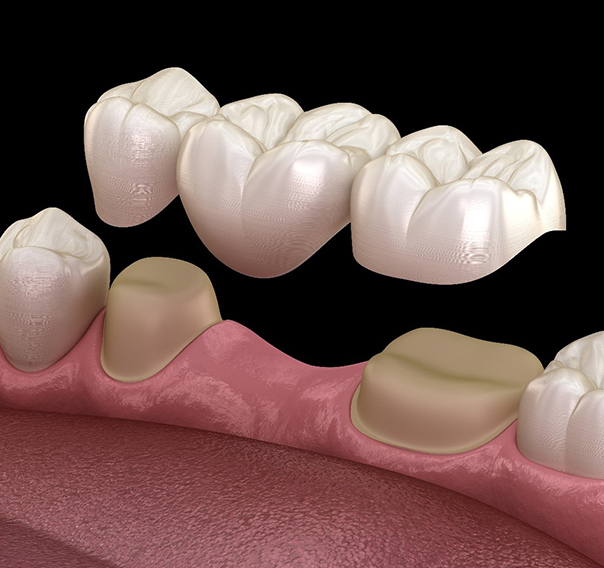
A conventional fixed bridge usually involves the shaping and capping of teeth on either side of the missing tooth space. These capped teeth serve as pillars for the false teeth, or "pontics," that fill the void. Just as a bridge over water depends on strong pillars at both ends, a dental bridge derives its strength and stability from the capped teeth attached to one or more pontics.
On the other hand, a cantilever fixed bridge, although similar to a conventional fixed bridge, has a key difference. Only one side of the pontic is connected to a capped tooth for support.
Implant-Supported Bridges
Dental implants are the most sophisticated solution for replacing missing teeth, perfectly mimicking the look, feel, and function of natural teeth. An implant-supported bridge is an excellent treatment choice as it eliminates the need to alter or involve surrounding natural teeth.
Dental implants act like natural tooth roots, providing crucial support for a bridge. Implant-supported bridges offer a flexible solution to restore a full smile, with strategically positioned implants capable of supporting any number of replacement teeth. Additionally, dental implants prevent the bone loss usually associated with tooth loss, helping to maintain normal facial structure.
At Lakeview Family Dentistry, our mission is to help every patient achieve the best possible oral health and a stunning smile. We provide expert and experienced care, using advanced dental implant techniques to transform incomplete smiles into confident ones that look and function exceptionally well.
What to expect when getting a traditional bridge
The process of getting a fixed bridge usually requires multiple visits. It involves preparing the teeth that will support the bridge, taking impressions, fitting a temporary bridge, and finally cementing the permanent bridge in place.
The first step is a thorough diagnostic assessment to create a suitable treatment plan. If you're getting a traditional fixed bridge, the next step is to prepare the abutment teeth for full-coverage crowns. Depending on how many teeth are involved, we might take an impression for the permanent bridge during this visit or the next one. In the meantime, we'll fit temporary crowns or a bridge to protect the prepared teeth.
After the preparation, it's normal to experience some sensitivity and gum soreness, but this usually lessens over time. However, temporary restorations might not fit as precisely as the final permanent crown or bridge, which could lead to ongoing sensitivity until the treatment is complete.
You should be careful with temporary restorations because they're not as durable as permanent ones. If your temporary bridge gets damaged or comes loose, keep it and contact our office to schedule an appointment for a replacement. We don't recommend trying to fix it yourself.
Before we cement the new bridge in place, we'll carefully check the shade, contours, fit, and occlusion. Once we've confirmed these aspects, we'll attach the permanent bridge. Since you've been wearing a temporary restoration, you might notice a slight difference in your bite and feel some pressure as the new bridge makes proper contact with the surrounding teeth. If you're still uncomfortable or your bite feels off after a few days, please get in touch with our office. We might need to make a minor adjustment.
What to expect when getting an implant-supported bridge
Dental implant placement is usually a minor outpatient surgery. The complexity of the operation depends on the number and type of implants needed, as well as any additional procedures to prepare the supporting bone.
As your committed healthcare partner, we prioritize keeping you informed throughout the entire process. To ensure accurate placement of your implant-supported bridge, we will gather detailed diagnostic records, including 3D images of your jaws and the relevant area.
Your care and comfort are our top priorities. We strive to make every visit to our office as comfortable and stress-free as possible. Before the implant placement, we will discuss anesthesia options and dental sedation thoroughly, and provide comprehensive pre-op and post-op care instructions.
After the dental implants for your bridge are placed, they may need a few months to fully integrate with the surrounding bone. In some cases, a temporary bridge can be attached on the same day for an immediate and aesthetically pleasing look. However, the permanent bridge is usually installed once the healing process and fusion with the surrounding bone are successfully completed.