Laser Gum Treatment
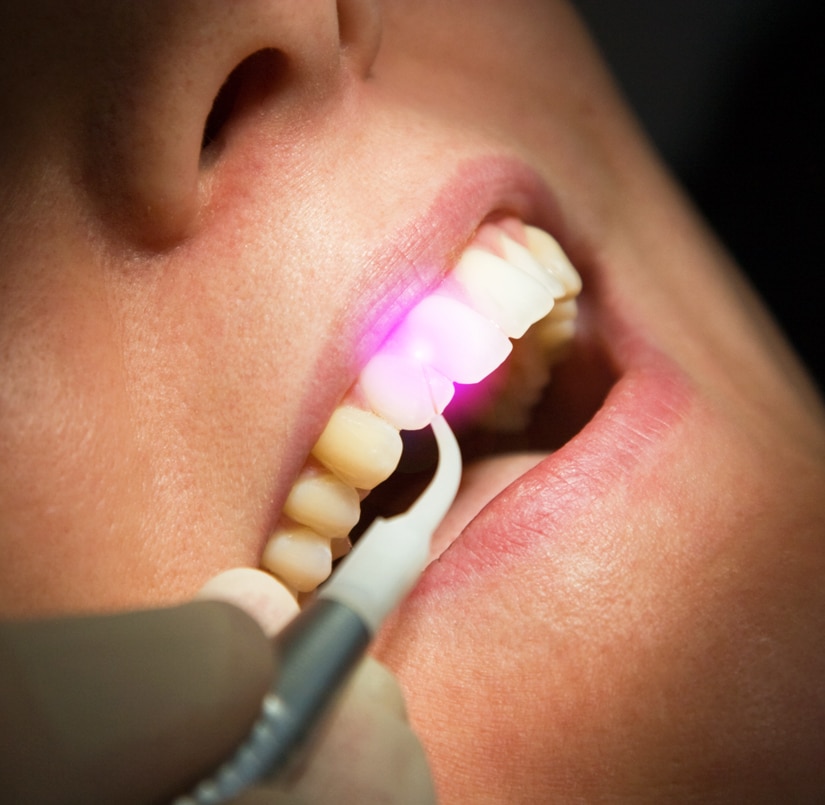
The advent of dental laser technology has ushered in a transformative era in contemporary dentistry, providing a wide range of treatments for various dental issues. Dental lasers have become indispensable in conducting procedures such as addressing tooth decay, managing periodontal disease, performing biopsies, eliminating oral lesions, curing restorative materials, and activating teeth whitening systems.
An noteworthy advantage of dental lasers lies in their ability to combine laser energy with water and air, facilitating the safe cutting and shaping of both soft and hard tissues within the oral cavity. By stimulating water molecules in the tooth, lasers enable precise cutting without requiring direct contact, heat, vibration, or pressure. This not only minimizes patient discomfort during procedures but also reduces the need for dental anesthesia. Moreover, dental lasers contribute to alleviating anxiety in patients who are uneasy about dental work, decreasing post-operative bleeding and swelling, and preserving healthy tooth structure during decay removal.
Nevertheless, it is essential to acknowledge that dental lasers may not be universally suitable for every dental procedure.