
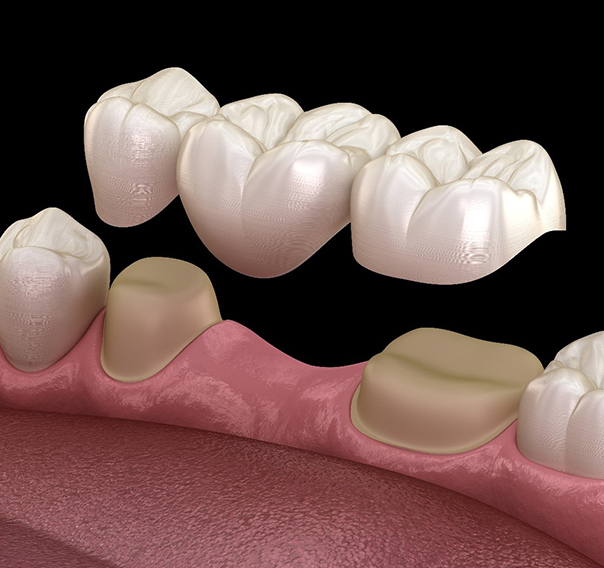
About dental bridges
A dental bridge offers a dependable and enduring solution for the replacement of missing teeth. In contrast to removable partial dentures that attach to existing teeth, a dental bridge relies on crowns affixed to neighboring teeth or dental implants. This not only restores the appearance and functionality of a natural smile but also prevents teeth from shifting and maintains proper bite alignment.
The concept of a fixed dental bridge is not a recent innovation and has been in use for thousands of years. Ancient civilizations utilized various materials such as animal and human teeth, bones, gold, and ivory to fill gaps in smiles.
Fortunately, dental materials and technology have progressed significantly over time. Contemporary dental bridges are crafted from high-quality materials like porcelain, porcelain fused to metal, and engineered ceramics such as zirconia. These bridges are not only more robust and long-lasting but also more aesthetically pleasing, providing a natural and attractive appearance.
Common types
A dental bridge can replace one or multiple missing teeth based on factors such as the number of missing teeth, the condition of remaining teeth, and other considerations. While there are four main types of bridges—traditional fixed bridge, implant-supported bridge, cantilever bridge, and Maryland bridge—the most frequently recommended options are the traditional fixed bridge and the implant-supported bridge.
Traditional fixed bridge
Typically, a traditional fixed bridge involves preparing and crowning teeth on both sides of the vacant space in the mouth. These crowned teeth serve as support for artificial teeth, known as "pontics," that fill the gap. Similar to a bridge over water relying on strong pillars at each end, a dental bridge gains strength and stability from crowned teeth fused to one or more pontics.
On the other hand, a cantilever fixed bridge, although similar to a traditional fixed bridge, differs in one crucial aspect: only one side of the pontic is attached to a crown for support.
Implant-Supported Bridges
Dental implants represent the most advanced method for replacing missing teeth, closely mimicking the look, feel, and function of natural teeth. An implant-supported bridge is often the optimal choice as it eliminates the need to prepare or involve adjacent natural teeth.
Dental implants function like natural tooth roots, providing necessary support for a bridge. Implant-supported bridges offer a versatile approach to rebuilding a complete smile, as strategically placed implants can support any number of replacement teeth. Moreover, dental implants prevent bone shrinkage resulting from tooth loss, helping to maintain normal facial contours.
At Lakeview Family Dentistry, our commitment is to assist every patient in achieving good oral health and a beautiful smile. We provide skilled and experienced care, utilizing advanced dental implant-based solutions to transform incomplete smiles into confident ones that both look great and function well.
What to expect when getting a traditional bridge
Fixed bridges are typically created over multiple visits, involving various steps such as preparing supporting teeth, taking impressions, placing a temporary bridge, and ultimately cementing the permanent restoration.
The process begins with a comprehensive diagnostic workup to formulate an appropriate treatment plan. For patients opting for a traditional fixed bridge, the subsequent step involves preparing the abutment teeth for full-coverage crowns. Depending on the number of teeth involved, an impression for the permanent bridge may be taken during this visit or the following one. Meanwhile, temporary crowns or a temporary bridge are installed to safeguard the prepared teeth.
Following the tooth preparation, some sensitivity and gum soreness may occur, which typically diminish over time. However, temporary restorations may not offer the same precision fit as the final permanent crown or bridge, potentially causing lingering sensitivity until the treatment concludes.
It's crucial to handle temporary restorations with care, as they lack the durability of permanent ones. If your temporary bridge sustains damage or comes off, please retain it and contact our office to arrange an appointment for a replacement. Avoid attempting any self-repairs.
Before cementing the new bridge, we conduct a thorough check of the shade, contours, fit, and occlusion. Once everything is verified, the permanent restoration is affixed. As you've been wearing a temporary restoration, you may notice a slight difference in your bite and feel some pressure as the new restoration establishes proper contact with adjacent teeth. If your bite still feels off after a couple of days or if any discomfort persists, please contact our office, as you may require a minor adjustment.
What to expect when getting an implant-supported bridge
The placement of dental implants is generally regarded as a minor surgical procedure conducted on an outpatient basis. The complexity of the procedure is contingent upon the type and quantity of implants needed, along with any additional procedures essential for preparing the supporting bone.
As your trusted healthcare partner, we are committed to keeping you well-informed throughout the entire process. For precise placement of your implant-supported bridge, we will capture detailed diagnostic records, including 3D images of your jaws and the relevant area.
Patient care and comfort stand as our foremost priorities. We aim to ensure each visit to our office is comfortable and stress-free. Before proceeding with the placement of your dental implants, we will engage in a thorough discussion regarding anesthesia options and dental sedation, in addition to providing comprehensive pre-operative and post-operative care instructions.
Following the placement of dental implants for your bridge, it may take a few months for them to fully integrate with the surrounding bone. In certain cases, a temporary bridge can be positioned on the same day to offer an immediate and aesthetically pleasing appearance. However, the permanent bridge is typically installed once healing and fusion with the surrounding bone are complete.