
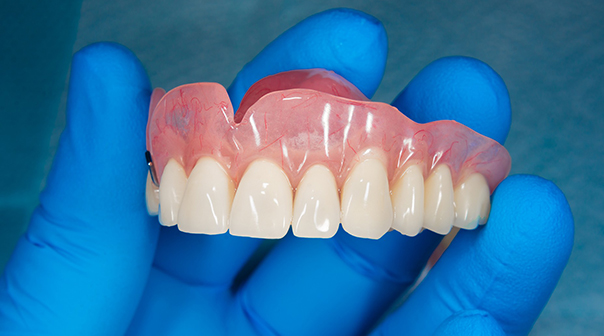
What are dentures?
Dentures are removable oral appliances skillfully crafted to snugly fit on the gums, comprising artificial teeth that closely mimic the appearance of natural ones and are supported by a base. Offering a cost-effective solution for the replacement of missing teeth, dentures prove effective in replacing multiple or all of the teeth in either the upper or lower jaws. Unlike permanent alternatives like bridgework and dental implants, dentures provide the benefit of being removable, facilitating easy cleaning and maintenance for optimal oral health. Furthermore, their removable nature allows for added convenience, as they can be taken out during sleep.
Types of Dentures
Removable dentures are categorized into two main types: full dentures and partial dentures. The ideal selection for your smile depends on the quantity and condition of your natural teeth. If you still have some robust natural teeth, a partial denture can provide an effective solution. Conversely, if all your upper or lower teeth are absent or necessitate extraction, a complete denture may be the most fitting option for your requirements.
Full Dentures
Full dentures, also referred to as complete dentures, present a viable solution for the replacement of either the upper teeth, lower teeth, or both. It's essential to acknowledge that dental treatments are not uniform for everyone. The design, creation, and fitting of full dentures are customized to address the distinctive requirements of each individual patient.Conventional Full Denture
After the extraction of all remaining teeth and the thorough healing of surrounding tissues, a customized denture is meticulously crafted and subsequently installed. The fabrication of a full denture post-complete healing guarantees a precise and comfortable fit.Immediate Denture
An immediate denture promptly offers patients replacement teeth right after the extraction process, eliminating the need for a waiting period until full healing. This approach prevents the inconvenience of temporary toothlessness, although adjustments and a reline might be necessary as the tissues heal. In specific circumstances, choosing a conventional denture may be necessary to ensure the highest level of comfort and fit.Overdenture
An overdenture is a full denture that achieves enhanced stability and support through unique attachments. These attachments are securely fastened either to the existing natural teeth or to specific dental implants.Implant-Supported Dentures
Known as an implant-supported denture, this type of denture attaches to a carefully positioned set of implants in either the upper or lower jaw. These implants function as small surgical posts, offering exact attachment points for the denture and markedly enhancing stability and retention.Partial Dentures
When robust natural teeth are still present, partial dentures offer an effective solution for replacing missing teeth. These partial dentures typically achieve secure retention and stability through clasps or precision attachments on adjacent teeth, addressing the edentulous areas (spaces formerly occupied by missing teeth).
Removable partial dentures are designed to fill the gaps left by individual and multiple missing teeth, restoring both the appearance and function of a complete smile. By simultaneously addressing the spaces created by missing teeth, partial dentures stabilize the dentition and bite, preventing the unwanted shifting of remaining natural teeth.
Much like full dentures, the design and fabrication of partial dentures are tailored to each patient's unique needs. With advancements in dental materials and technology, wearers of partial dentures now have a variety of options. The supportive framework of a partial denture can be crafted from diverse materials, including cast metal, flexible resins, and hybrid materials.
At Lakeview Family Dentistry, our commitment is to nurture healthy and beautiful smiles. As your dependable partner in care, you can rely on our office to create and fabricate a denture that not only looks appealing but also fits comfortably and serves you well for years to come.
What To Expect When You Receive Your New Denture
At Lakeview Family Dentistry, the paramount concern is the well-being and comfort of our patients. Our commitment is to promote optimal oral health and to keep our patients thoroughly informed throughout every step of their dental experience.
Adjusting to wearing a new denture
Adjusting to a new denture, especially a full denture, might entail a brief adaptation period. Minor challenges in speaking, chewing, and overall functionality with the new teeth can be expected initially. Attaining a complete and comfortable fit may require a few adjustments. If you observe any sore spots, we suggest wearing the denture for at least a day before your scheduled adjustment visit. This allows us to accurately pinpoint the areas causing irritation and make the necessary modifications.More saliva than usual
The heightened production of saliva in response to new dentures is a natural and temporary phenomenon. There's no need for alarm, as this increased salivary response will gradually revert to a normal level over time.Speaking with ease
In the beginning, attaining clear speech with new dentures may present a challenge, but this sensation will diminish within a few days. It is crucial to sustain regular speech patterns to assist in adapting to your new teeth. To ease this adjustment, you may want to practice reading aloud from printed materials or a computer.Getting used to eating with a denture
For those new to wearing dentures, the process of adjusting to eating with them may require some time. Adapting to eating with a full denture can be more challenging compared to a partial denture. To facilitate this transition, it's recommended to start with soft foods and refrain from chewing on only one side. With time, your tongue, lips, cheeks, and soft tissues will progressively acclimate to chewing with your denture, rendering the eating process more comfortable for you.Taking care of your dentures
Here are some guidelines for preserving the cleanliness and health of your dentures:
1. After meals, it's crucial to rinse your dentures and brush them daily to prevent the buildup of stains and bacteria on your new set of teeth. Use a denture-specific brush for optimal cleaning. Additionally, remember to soak your dentures in water when not in use and, at least once a week, employ a recommended denture cleaner for thorough maintenance.
2. Ensure you regularly brush any remaining natural teeth and your gums to keep them clean and maintain healthy, firm tissues. For individuals with an upper denture, it's essential to rinse and gently clean the roof of your mouth as well.
3. Remove your dentures before going to bed. This practice allows your gums and jawbone to rest, minimizing the risk of irritation, infection, and bone shrinkage (resorption).
Added stability
In certain instances, the condition of underlying tissues and other variables may require supplementary retention techniques for full dentures. Although denture adhesive is commonly effective, the use of implant-supported or attachment-clipped full dentures provides enhanced stability and improved retention.Follow-up care
Regular checkups and care are vital for maintaining oral health and overall well-being. These appointments encompass not only the evaluation of the fit and condition of your dentures but also include a thorough examination to assess the condition of any remaining teeth and examine the health of both the soft and hard tissues in and around your mouth.Relines
Over time, changes in the supporting tissues of the denture may occur, resulting in reduced comfort and stability. This transformation arises from the natural shrinkage or remodeling of the shape and contours of the tissues. In such cases, a reline procedure might be advised to effectively tackle these issues.At Lakeview Family Dentistry, our dedication is to deliver outstanding care. Should you have any further questions or concerns regarding your new dentures, please don't hesitate to reach out to our office. We are here to help and support you.