

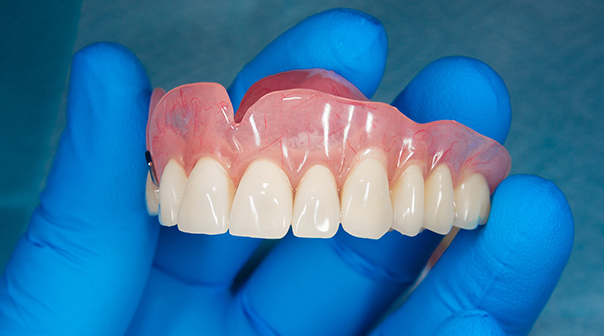
What are dentures?
Dentures are appliances that can be taken out of the mouth and are designed to fit comfortably on the gums. They have artificial teeth that look natural and are supported by a base. Dentures are a cost-effective option for replacing missing teeth and can be used to replace a few or all of the teeth in the upper or lower jaws. Unlike fixed solutions like bridgework and dental implants, dentures can be removed for cleaning and maintaining oral health. They can also be taken out while sleeping.
Types of Dentures
There are two primary types of removable dentures: full dentures and partial dentures. The most suitable option for your smile depends on the number of natural teeth remaining in your mouth and their overall health. If you still have some strong natural teeth, a partial denture can provide an effective solution. However, if all your upper or lower teeth are missing or need to be extracted, a complete denture may be the best choice for you.
Full Dentures
Full dentures, also referred to as complete dentures, are a suitable option for replacing either the upper teeth, lower teeth, or both. It is important to note that there is no universal solution that fits every case when it comes to dental treatments. The design, creation, and placement of full dentures depend on the individual requirements of each patient.Conventional Full Denture
After the removal of all remaining teeth and sufficient healing of the surrounding tissues, this particular denture is created and inserted. The fabrication of a full denture after complete healing ensures a precise and comfortable fit.Immediate Denture
An immediate denture allows patients to have teeth right after extraction without waiting for complete healing. While this offers the advantage of not being toothless, it may need adjustments and a reline as the tissues heal. In certain cases, a conventional denture may be necessary for the best comfort and fit.Overdenture
An overdenture is a complete denture that is made more stable and supported by special attachments. These attachments are either secured to the remaining natural teeth or to specialized dental implants.Implant-Supported Dentures
This type of denture is called an implant-supported denture because it connects to a specific number of implants strategically placed in the upper or lower jaw. These implants act as small surgical posts, offering precise attachment points for the denture and greatly enhancing stability and retention.Partial Dentures
In situations where some sturdy teeth remain, partial dentures can offer an effective solution for the replacement of missing teeth. Partial dentures typically achieve adequate retention and stability with clasps or precision attachments on the teeth adjacent to the edentulous areas (the spaces formerly occupied by the missing teeth).
Removable partial dentures can fill the void left by individual missing teeth and multiple ones to restore the look and function of a complete smile. At the same time a partial denture fills the gaps left by missing teeth; it also stabilizes the dentition and bite and prevents unwanted drifting of the remaining natural teeth.
As with full dentures, partial denture design and fabrication varies based on a patient’s specific needs. With advances in dental materials and technology, partial denture wearers have more options than ever before. Today, a partial denture’s supportive framework can be fabricated from various materials, including cast metal, flexible resins, and hybrid materials.
At the office of Lakeview Family Dentistry, we’re dedicated to building healthy and beautiful smiles. As your trusted partner in care, you can depend on our office to design and fabricate a denture that will look good, fit comfortably, and serve you well for years to come.
What To Expect When You Receive Your New Denture
Our utmost priority at Lakeview Family Dentistry is ensuring the care and comfort of our patients. We strive to promote optimal oral health and keep our patients well-informed throughout their journey.
Adjusting to wearing a new denture
Getting used to wearing a new denture, especially a full denture, can take a little time. It’s not unusual to need some minor adjustments as you begin to speak, chew, and function with your new teeth. It can take a few adjustments to fit completely and feel comfortable. If you have a sore spot, try to wear the denture at least the day before your adjustment visit. In this way, we can see exactly where we need to relieve the area causing your irritation.More saliva than usual
Your mouth may produce more saliva as a natural response to new dentures. However, there is no need to worry as this is only a temporary reaction. Eventually, the flow of saliva will gradually return to a normal level.Speaking with ease
Speaking clearly with new dentures may initially be difficult, but this sensation will fade within a few days. It is crucial to continue talking as you normally would to help yourself adjust to your new teeth. To facilitate this process, you can practice reading aloud from printed materials or a computer.Getting used to eating with a denture
If you are new to wearing dentures, it may take some time to adjust to eating with them. Adjusting to eating with a full denture can be more difficult than with a partial denture. It is recommended to start with soft foods and avoid chewing on only one side. Your tongue, lips, cheeks, and soft tissues will eventually adapt to chewing with your denture, making eating easier for you.Taking care of your dentures
Here are some tips for maintaining clean and healthy dentures:
1. After eating, make sure to rinse your dentures and brush them daily. This will prevent stains and bacteria from building up on your new set of teeth. It's best to use a brush specifically designed for dentures. Additionally, remember to soak your dentures in water when you're not wearing them and at least once a week in a recommended denture cleaner.
2. Don't forget to brush any remaining teeth and your gums to keep them clean and maintain healthy and firm tissues. If you wear an upper denture, it's important to rinse and gently clean the roof of your mouth as well.
3. Take out your dentures before going to bed. This practice allows your gums and jawbone to rest, reducing the risk of irritation, infection, and bone shrinkage (resorption).
Added stability
In certain situations, full dentures may require extra retention methods due to the condition of the underlying tissues and other factors. Although denture adhesive is usually enough, implant-supported or attachment-clipped full dentures provide enhanced stability and retention.Follow-up care
Regular checkups and care are essential for maintaining oral health and overall well-being. During these visits, we not only examine the fit and condition of your dentures but also conduct a thorough examination to evaluate the condition of any remaining teeth and assess the health of all the soft and hard tissues in and around your mouth.Relines
Over time, the tissues that support the denture can undergo changes. These changes can cause the denture to become less comfortable and stable as the shape and contours of the tissues shrink or remodel. In such cases, a reline procedure may be suggested to address these issues.At Lakeview Family Dentistry, we are committed to delivering top-notch care. Should you have any further inquiries or worries regarding your new dentures, please don't hesitate to reach out to our office.